
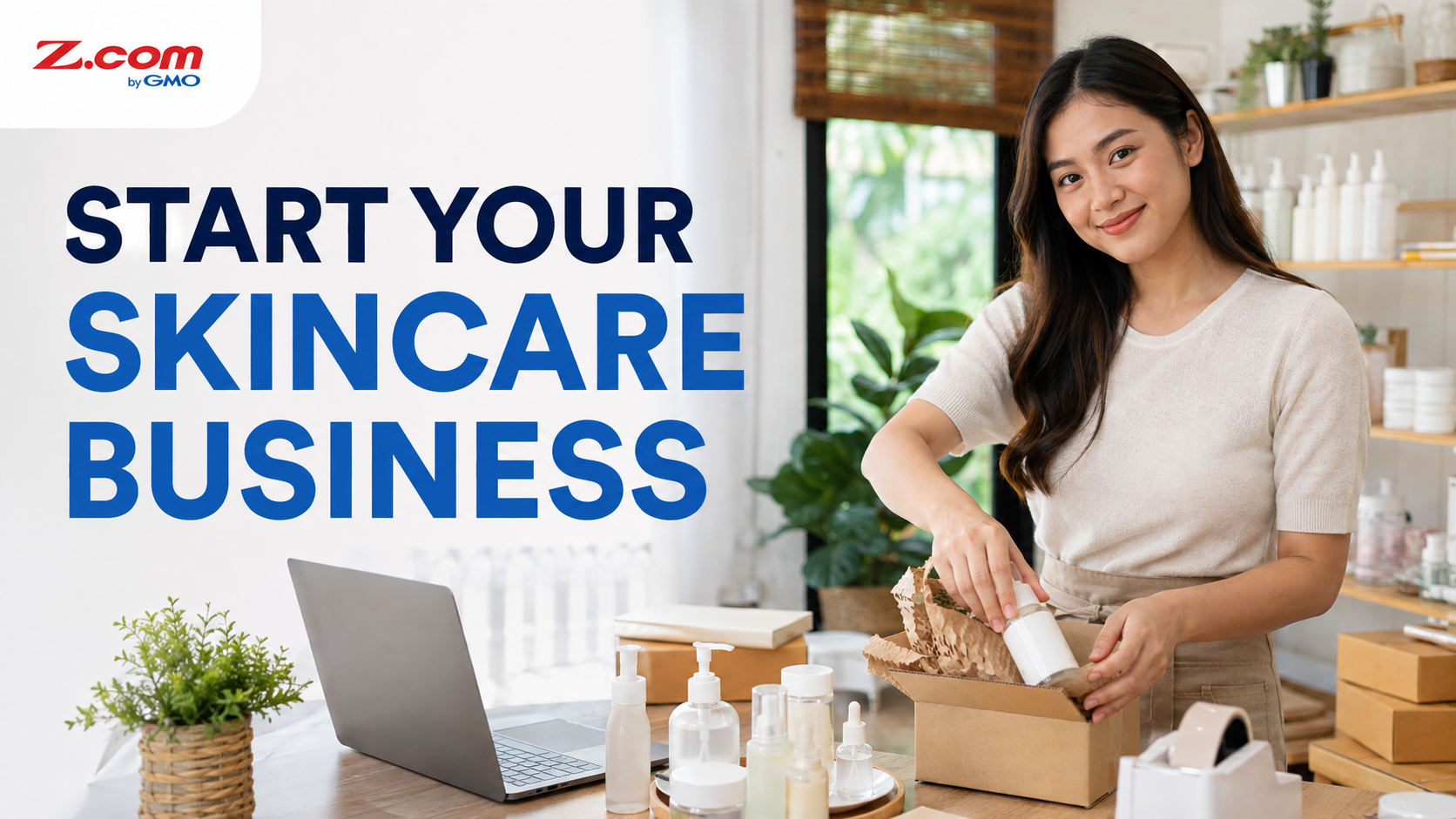
How to Start an Online Skincare Business in the Philippines
Skincare and wellness products are a highly visible category for Filipino online sellers right now, driven by TikTok Shop trends, Korean-inspired routines, and a growing preference for natural ingredients. But skincare isn't like reselling phone cases — it's a regulated product category, and getting the paperwork right from day one protects both your customers and your business. This guide walks through business registration, FDA rules, sourcing options, and how to set up a website that makes shoppers trust you enough to buy.
Quick answer: To start an online skincare business in the Philippines, register your business with the DTI (sole proprietorship) or SEC, then confirm with FDA Philippines whether your activities require your own FDA License to Operate and Certificate of Product Notification — this generally applies if you manufacture, import, or private-label products, while a business that only retails properly notified cosmetics from an authorized supplier may be treated differently but should still verify the supplier's documentation. From there, pick a sourcing model and build a professional website with SSL protection and a proper domain.
Table of contents
- Why Skincare and Wellness Are Worth Considering in 2026
- Register Your Business Before You Sell
- Understand FDA Rules Before You List a Single Product
- Choose How You'll Source Your Products
- Build a Website Customers Trust — Not Just a Marketplace Shop
- Before You Launch: Quick Checklist
- Common Mistakes to Avoid
- Frequently Asked Questions
Why Skincare and Wellness Are Worth Considering in 2026
Skincare and wellness products remain highly visible across Philippine e-commerce and social-commerce platforms, alongside home essentials and tech accessories, with demand often shaped by ingredient-led trends and short-form video content. On TikTok Shop, Korean-style "glass skin" routines, snail mucin serums, centella asiatica formulas, niacinamide serums, and beach-season sunscreen sticks have become popular talking points among shoppers looking for visible results.
This kind of ingredient-driven interest is part of why skincare remains an appealing niche for new sellers. It's also a category where trust matters more than most: customers are putting products on their skin, so proof that you're a legitimate, compliant seller is part of what makes them buy.
Register Your Business Before You Sell
If you're selling as an individual, the starting point is registering a business name with the Department of Trade and Industry (DTI); partnerships and corporations register with the Securities and Exchange Commission (SEC) instead. Once you have a registered business name, you'll also need to register with the Bureau of Internal Revenue (BIR) and comply with the current tax-registration and invoicing requirements, and check with your city or municipality about a local business permit.
Z.com PH has a step-by-step walkthrough of the process if you haven't registered a business name before: How to Register Business Name with DTI. Doing this first matters for skincare specifically, because FDA applications and supplier agreements typically ask for proof of business registration before they'll work with you.
Understand FDA Rules Before You List a Single Product
The Food and Drug Administration (FDA) Philippines regulates cosmetics and skincare under Republic Act No. 9711 and the ASEAN Cosmetic Directive, and the rules apply differently depending on your business model.
If you manufacture your own formulas, import products directly, or put your own brand on someone else's formulation (private label), you need a License to Operate (LTO) from the FDA before you can legally distribute or sell, plus a Certificate of Product Notification (CPN) for each product through the FDA's online portal. Every product also needs a Product Information File on hand with its ingredients and safety information in case the FDA asks for it. LTO validity and renewal requirements depend on the applicable authorization and current FDA rules — check the validity date shown on your issued LTO and confirm the latest renewal filing period directly with FDA Philippines.
If your business model is reselling or dropshipping established, already-registered brands — a common starting point for new online sellers — a business that only retails properly notified cosmetics sourced from an authorized local supplier may be treated differently from a trader, wholesaler, importer, or manufacturer. Because the required authorization depends on the activities you perform, confirm your establishment classification with FDA Philippines before selling. Either way, verify that your supplier or distributor actually holds a valid LTO and CPN for the products you're selling, and keep that documentation on file. Selling unregistered or mislabeled cosmetics, even as a reseller, can still expose your business to risk.
Required labeling information generally includes the product name and function, instructions for use, ingredient list, country of manufacture, the responsible company's name and address, net contents, batch number, and any required warnings or date markings. Exact requirements depend on the applicable ASEAN and Philippine cosmetic labeling rules. If a supplier can't show you this information, treat it as a warning sign. For current forms and the online application portal, the FDA Philippines website is the official reference. Requirements can change and depend on your exact business activities, so confirm your classification and current requirements directly with FDA Philippines before launch.
Choose How You'll Source Your Products
There are three common ways new sellers get into skincare:
Reselling established brands. You buy finished, already-registered products from a local distributor and sell them on your own channels. This has the lowest regulatory burden but usually the thinnest margins, and you're dependent on your supplier's stock and compliance.
Dropshipping. Similar to reselling, but you don't hold inventory — orders route to a supplier who ships directly to the customer. It's a low-cost way to test which products sell before committing to inventory. Z.com's guide to building a dropshipping business in the Philippines covers the logistics side in more detail.
Private label or your own formulation. You work with a contract manufacturer to put your own branding on a product, or develop a formula from scratch. This gives you the most control over margins and brand identity, but it's also the path that requires your own LTO and CPN, plus more upfront capital and lead time.
Most sellers start with reselling or dropshipping to validate demand, then move toward private label once they have consistent sales and know which products their customers actually want.
Build a Website Customers Trust — Not Just a Marketplace Shop
Selling only through Shopee, Lazada, or TikTok Shop is a reasonable way to start, but marketplace listings put you next to dozens of competing sellers and give you no control if the platform changes its fees or policies. A dedicated website — even a simple one — gives skincare buyers a place to see your certifications, ingredient details, and real contact information, which matters more for skin and wellness products than for most categories.
Z.com's AI Powered Website Builder can generate a professional business website in about 30 seconds and includes a free SSL certificate and mobile-friendly design, so customers checking your site on their phone see a secure, professional page. Pairing it with a proper domain registration — rather than relying only on a marketplace subdomain — and a Titan Business Email address that matches your domain also makes a real difference in how trustworthy a new skincare brand looks to a first-time buyer. If you're still deciding between a marketplace-only approach and owning your own channel, this breakdown of building a sales channel you own covers the trade-offs.
Before You Launch: Quick Checklist
- Register your business name with DTI (or SEC), complete BIR registration, and arrange the appropriate BIR-compliant invoices
- Confirm with FDA Philippines whether your business activities require your own FDA LTO and CPN, or whether verifying your supplier's documentation is sufficient
- Ask suppliers for proof of FDA registration and full ingredient and labeling information
- Decide on your sourcing model: reselling, dropshipping, or private label
- Set up a professional website with SSL protection, a real domain, and a matching business email address
- Prepare clear product photos, ingredient lists, and usage instructions for every listing
- Plan your payment and shipping options before your first sale
Common Mistakes to Avoid
Skipping FDA verification because you're "just reselling." Even resellers can be liable for selling unregistered or unsafe cosmetics — always verify your supplier's paperwork before you list a product.
Launching without any way to show ingredients or certifications. Skincare buyers actively look for this information; leaving it out costs you sales, not just compliance points.
Relying on one marketplace account only. Policy changes, account suspensions, or fee increases can happen with little notice — a website you own is a backup you control.
Frequently Asked Questions
Do I need an FDA license if I'm just reselling skincare products I buy from a local supplier?
Not necessarily your own LTO — a business that only retails properly notified cosmetics from an authorized supplier may be treated differently from a trader, wholesaler, importer, or manufacturer. Confirm your classification with FDA Philippines, and verify that your supplier holds a valid LTO and CPN for the products you're reselling, since selling unregistered cosmetics can still create liability for your business.
How long does FDA product notification take?
Processing time can vary depending on the application, the completeness of the submission, and the FDA's current procedures. Check the latest FDA Citizen's Charter and application portal before setting your launch timeline.
Can I run a skincare business entirely through Shopee, Lazada, or TikTok Shop without my own website?
Yes, many sellers start that way, but a dedicated website gives you a place to show certifications and contact details, and it protects you from relying entirely on one platform's rules and fees.
What's the cheapest way to test a skincare product idea before investing in inventory?
Dropshipping or reselling an established brand lets you test demand with minimal upfront cost before considering private label or your own formulation.
Starting a skincare business in the Philippines begins with proper registration (DTI or SEC, plus BIR), and your FDA obligations depend on whether you manufacture, import, private-label, or resell existing brands — resellers should confirm their classification with FDA Philippines and verify their supplier's compliance. Choose a sourcing model that matches your budget and risk tolerance, and treat your online store as a trust signal: clear ingredient information, a proper domain, and a professional email address help skincare buyers feel confident buying from a new brand.
Ready to give your skincare brand a professional online presence? Z.com's AI Powered Website Builder can create a mobile-friendly business website in about 30 seconds, with SSL protection and options for a custom domain and business email.
Build Your Website with Z.com